Airport Terminal Building
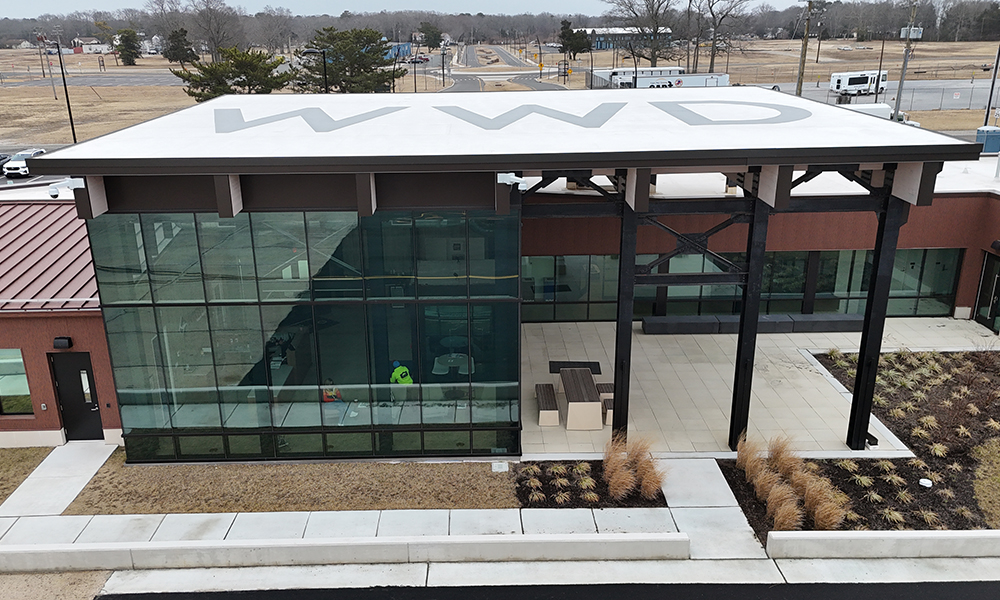
C&S was selected by the Delaware River & Bay Authority (DRBA) to serve as prime consultant for the design and construction of a new 5,000-square-foot multi‑use terminal building at Cape May Airport (WWD). The new facility replaces the aging “Old Terminal,” which had exceeded its useful lifespan, and serves FBO passengers, pilots, airport staff, and DRBA administration while also providing public‑use space.
The project team was tasked with transforming a gateway location—one of the first structures visitors see upon entering airport property—into a modern, welcoming focal point that reflects the unique charm of the Cape May region. The site included two deteriorated hangars, underground utilities, overhead power and communication systems, and proximity to an existing fuel facility and tenant storage hangars, all of which required careful coordination during design and construction.
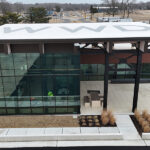
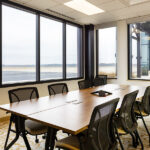
Working alongside our architectural partner, Fennick McCredie Architecture, the team developed the “jewel box” concept. The design features floor‑to‑ceiling glass walls that offer panoramic views of the airfield and blur the line between interior and exterior environments. A combination of steel framing, CLT decking, and glulam beams creates a warm, modern aesthetic that balances aviation utility with natural materials.
The terminal’s wings house a public conference room, pilot lounge, restrooms, FBO prep area, offices, and building support spaces. Exterior enhancements include an airside patio where passengers can relax while waiting for flights and landside improvements such as parking, a vehicle gate, and low‑maintenance landscaping.
C&S provided comprehensive MEP and life‑safety engineering to support the architectural vision. Two ground‑mounted RTUs were concealed behind screen walls to maintain the clean façade. Mechanical and electrical systems were thoughtfully configured to preserve interior openness while meeting performance needs. The building uses multi‑zone VAV systems for climate control and a central boiler for perimeter heating. Due to site constraints, the facility retained a 208Y/120V, 3‑phase service.
The project advanced from design development through construction in approximately nine months. Despite challenges—including differing design perspectives and significant equipment lead times—the team delivered a highly successful terminal that DRBA and Cape May County continue to use as a showpiece facility.