A Closer Look at the MS4 Program
What Is an MS4? The Basics
MS4 stands for Municipal Separate Storm Sewer System, and it refers to a publicly owned conveyance system — pipes, ditches, catch basins, swales, detention ponds, and related infrastructure — that is designed to collect and discharge stormwater runoff, and that is separate from the sanitary sewer system. Unlike combined sewer systems that carry both sewage and stormwater to a treatment plant, an MS4 discharges directly to receiving waters such as streams, rivers, lakes, and wetlands, typically without treatment.
This direct-discharge pathway is precisely what makes stormwater management so critical. Rain that falls on a parking lot, a road, or a construction site picks up pollutants — oils, sediment, fertilizers, litter, heavy metals, bacteria — and carries them through the storm sewer network into the nearest waterway. Multiply that by thousands of municipalities across the country, and the cumulative water quality impact is enormous.

The National Framework: The Clean Water Act and the NPDES Program
The regulatory backbone of MS4 oversight is the federal Clean Water Act (CWA), enacted in 1972 with the ambitious goal of restoring and maintaining the chemical, physical, and biological integrity of the nation’s waters. The CWA’s primary regulatory tool is the National Pollutant Discharge Elimination System (NPDES), administered by the U.S. Environmental Protection Agency (EPA). The NPDES program requires permits for any “point source” discharge of pollutants to waters of the United States — and, following key amendments in 1987, that definition was extended to include stormwater discharges from MS4s.
Because the CWA authorizes the EPA to delegate NPDES permitting authority to qualified states, most MS4 permits in the United States are actually issued and enforced at the state level rather than directly by the EPA. This means that while the overarching goals and minimum federal standards are consistent nationwide, the specific permit conditions, reporting requirements, and compliance frameworks vary from state to state — sometimes considerably. For C&S offices in states other than New York, the substantive obligations may look different, but the underlying structure and intent of the program remain the same.
MS4 in New York State
In New York, the NPDES stormwater program is administered by the New York State Department of Environmental Conservation (NYSDEC). The State Pollutant Discharge Elimination System (SPDES) — New York’s equivalent of the federal NPDES — governs how municipalities manage and discharge stormwater. For regulated small MS4s, the operative instrument is the SPDES General Permit for Stormwater Discharges from Municipal Separate Storm Sewer Systems, commonly referred to simply as the MS4 General Permit. The most recent iteration of the General Permit is GP-0-24-001 and was enacted on January 3, 2024.
Coverage under the General Permit is not optional for qualifying communities. Municipalities located within or adjacent to a federally designated urbanized area are required to obtain coverage and comply with permit conditions. Over the years, NYSDEC has also designated certain communities outside traditional urbanized area boundaries as regulated MS4s based on factors such as proximity to sensitive receiving waters or demonstrated water quality concerns. However, while the MS4 program was originally started with the intent of regulating stormwater in municipalities, or traditional land use operators, it has since been expanded to include non-traditional land use operators whose stormwater systems are also separate from their sanitary systems. These operators include, but are not limited to, universities, correctional facilities, and airports. The automatically designated areas and the additionally designated areas can be found on NYSDEC’s online Stormwater Interactive Map.
The Stormwater Management Program (SWMP) Plan
The centerpiece of MS4 compliance in New York — and in most states — is the Stormwater Management Program Plan, or SWMP Plan, which documents how the municipality intends to reduce the discharge of pollutants to the maximum extent practicable (MEP) and protect water quality. The SWMP Plan is organized around six minimum control measures (MCMs), each targeting a different pathway through which pollutants enter the storm sewer system:
- Public Education and Outreach — raising awareness among residents, businesses, and employees about the impacts of stormwater pollution and steps they can take to reduce it.
- Public Participation and Involvement — engaging the community in MS4 decision-making, including public comment opportunities on the SWMP Plan.
- Illicit Discharge Detection and Elimination (IDDE) — identifying and removing non-stormwater discharges (e.g., sanitary connections, dumping) from the storm sewer system.
- Construction Site Stormwater Runoff Control — implementing and enforcing controls on construction projects that disturb soil and contribute sediment to waterways.
- Post-Construction Stormwater Management — ensuring that new development and redevelopment incorporate permanent stormwater management practices that continue to function long after construction is complete.
- Pollution Prevention/Good Housekeeping for Municipal Operations — training municipal employees and implementing operational practices to reduce pollutant discharges from the municipality’s own facilities and activities.


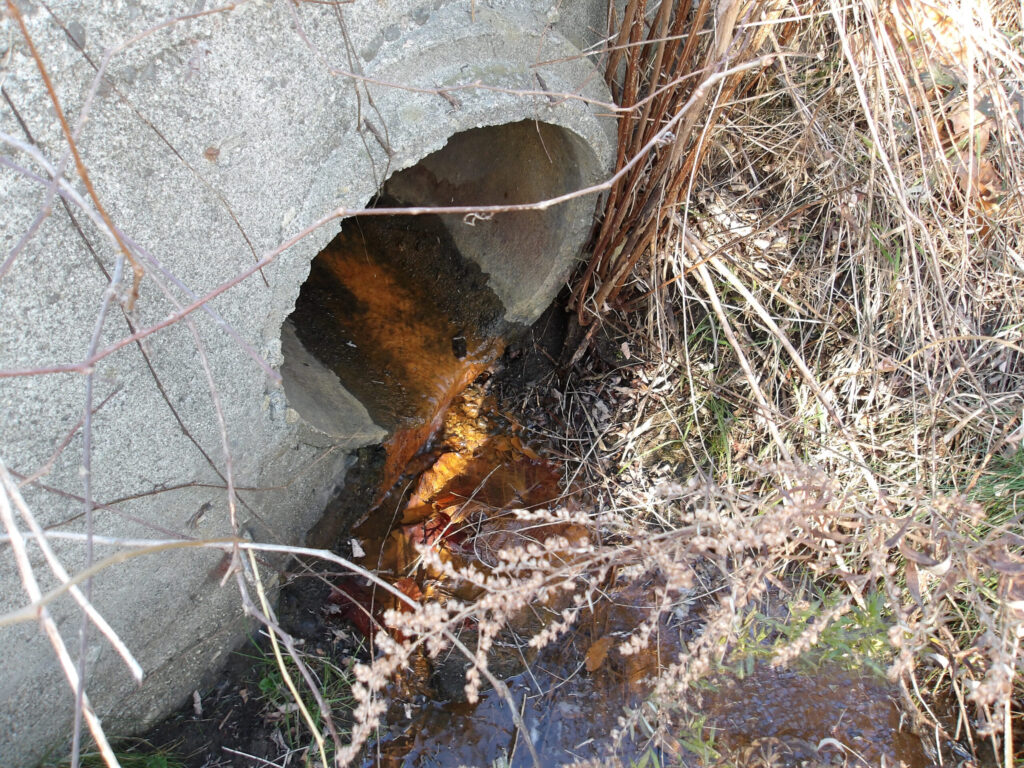
Each minimum control measure requires permittees to identify specific Best Management Practices (BMPs), establish measurable goals, and track implementation progress. NYSDEC has increased the rigor of these requirements over successive permit cycles, reflecting both scientific advances in stormwater management and the state’s ongoing commitment to meeting water quality standards — particularly in watersheds subject to Total Maximum Daily Loads (TMDLs) for nutrients, sediment, and other pollutants.
New York’s MS4 program also intersects with the SPDES Multi-Sector General Permit (MSGP) for industrial stormwater and the SPDES Construction General Permit (CGP), which applies to land-disturbance activities of one acre or more. Collectively, these permits form a layered regulatory framework that tracks stormwater from its origins — a disturbed construction site, an industrial yard, a municipal street — through the conveyance system to the receiving waterbody.
How MS4 Work Connects Across C&S
Civil Group
The connection between MS4 and civil engineering is perhaps the most direct. Municipal infrastructure projects — road reconstructions, culvert replacements, utility corridor improvements — frequently trigger both the Construction General Permit and post-construction stormwater requirements under the MS4 permit. Our civil engineers design the detention basins, bioretention cells, and outlet control structures that serve as the long-term BMPs required by state permit conditions.
Transportation Group
State and county transportation departments are among the most significant MS4 permittees in New York and nationally. DOTs own vast networks of roadway drainage — miles of curb and gutter, thousands of catch basins, countless roadside swales — all of which fall under MS4 jurisdiction. Transportation work on highway improvement projects, bridge replacements, and roadway expansions regularly implicates stormwater compliance, both during construction and in the post-construction phase.
Aviation Group
Airports present a unique and highly specialized stormwater challenge. Aviation facilities generate stormwater runoff laden with de-icing fluids, aircraft fueling residues, and other aviation-specific pollutants that require careful management under both the MS4 program and the NPDES Multi-Sector General Permit. The footprint of a commercial or regional airport — large impervious surfaces, significant fuel and chemical storage areas, proximity to sensitive ecological resources — creates a complex stormwater management environment.
Looking Ahead: Trends Shaping MS4 Practice
The MS4 landscape continues to evolve, and several trends are worth watching as they shape the work our clients will face — and that we will be called upon to support.
Green infrastructure and low-impact development (LID) are no longer optional considerations in stormwater design — they are increasingly required by state permits and local ordinances. Practices like bioretention, permeable pavement, green roofs, and urban tree canopy management are being incorporated into MS4 SWMP Plans as measurable BMPs rather than aspirational goals. This trend opens significant opportunities for innovative design work across our practice groups.
TMDL-based requirements are tightening. Watersheds that are listed as impaired under the CWA’s Section 303(d) process and that have established TMDLs are seeing more prescriptive permit conditions tied to pollutant load reduction targets. Municipalities in these watersheds may face requirements to quantify pollutant loads, demonstrate load reductions, and implement capital projects.
Finally, regulatory enforcement is becoming more visible. NYSDEC and EPA have both signaled increased attention to MS4 compliance, including field inspections of outfalls, audit reviews of SWMP Plans and documentation, and formal enforcement actions for permittees who fail to maintain adequate programs. This regulatory environment reinforces the value of maintaining strong, well-documented stormwater management programs — and of having a knowledgeable consulting team to support them.

For more information, please contact Jon Ericksen at jericksen@cscos.com.

Environmental Scientist